
When a Crystal Entangles: Quantum Quirks and Ancient Whispers
2026-07-14 — ABikram Mondal
The Evening Bell and a Crystal's Secret
The evening aarti bells just finished at the small temple down the lane. That familiar sound, a resonance that always settles my mind, got me thinking about other kinds of resonance, other kinds of connection. Just yesterday, I was debugging a tricky race condition in a client’s payment gateway – a tiny, almost imperceptible delay causing all sorts of havoc. And then I saw the news, about scientists finding quantum entanglement in something as comparatively huge as a crystal, visible to the naked eye. A crystal!
It’s a peculiar thing, this quantum world. For years, the idea of entanglement, where two particles become linked no matter the distance, was something you’d associate with the truly microscopic, the realm of the impossibly small and fleeting. It felt almost like magic, or perhaps a cosmic prank. But now, in a crystal large enough to hold, this 'spooky action at a distance' is being observed. It makes you wonder, doesn't it?
What Even Is This Quantum Entanglement?
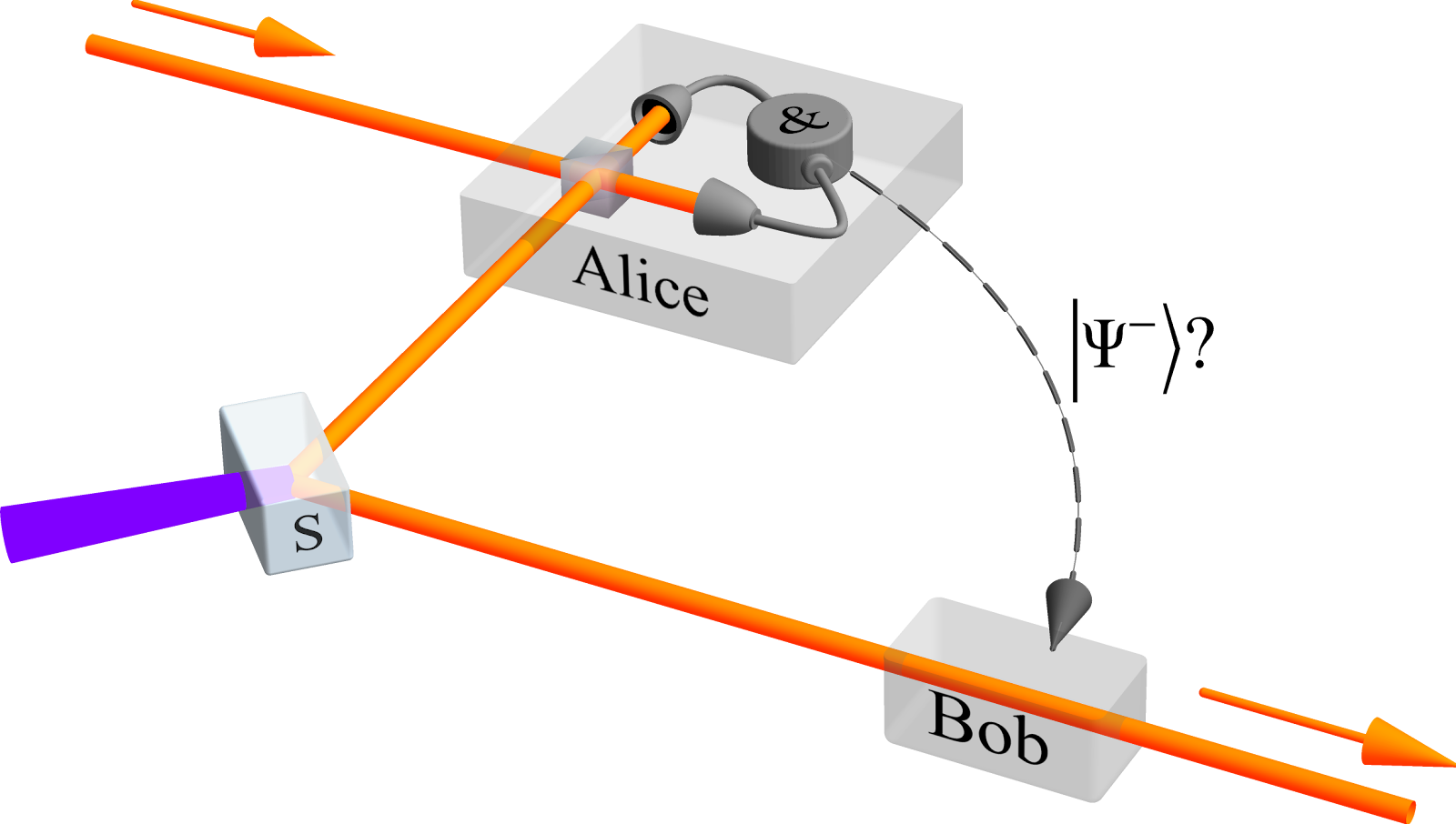
Imagine you have two coins. You flip them, and they land on either heads or tails. If they’re normal coins, one landing on heads tells you nothing about the other. But with entangled coins, if one lands on heads, you instantly know the other must be tails, even if it’s miles away. And here’s the kicker: before you look, they’re both in a superposition, a blur of heads AND tails simultaneously. It’s only when you observe one that its state, and thus the state of its distant partner, becomes definite. This is quantum entanglement in its simplest form.
Historically, physicists believed this connection was incredibly fragile, breaking down the moment you scaled up. The world we experience, full of solid objects and predictable outcomes, seemed to be the antithesis of quantum weirdness. But this new finding, seeing it persist in a macroscopic crystal, blurs that line. It suggests that perhaps the quantum realm isn't so separate from our everyday reality after all. It’s not just for particles in a vacuum; it’s happening in something you could hold in your hand.
Does This Echo Ancient Thoughts, or Challenge Them?
When I hear about such interconnectedness, my mind, naturally, drifts to the ancient wisdom of Bharat. The Upanishads speak often of Brahman, the ultimate reality, as being immanent in everything, a single, unified consciousness pervading all. The concept of advaita, non-duality, asserts that ultimately there is no separation between individual consciousness (Atman) and the universal consciousness (Brahman). Everything is fundamentally connected, a grand, intricate web of existence.
“Ishavasyam idam sarvam yat kincha jagatyam jagat.”
— Ishavasya Upanishad (meaning: “All this, whatsoever moves in this moving world, is enveloped by God.”)
This verse, among many others, suggests an inherent unity, a subtle thread linking all phenomena. Does quantum entanglement in a crystal then confirm this? I hesitate to force parallels. Science, particularly physics, seeks to describe the observable universe through rigorous experimentation and mathematical models. Vedic texts, while profound, are not scientific treatises in the modern sense. They offer a framework for understanding existence, consciousness, and our place within it, often through metaphor and direct experience (anubhava).
However, the sense of an underlying connection, a fundamental non-separateness that entanglement hints at, certainly resonates with the non-dualistic worldview. It challenges our everyday perception of discrete objects as entirely independent. If a crystal, a seemingly mundane object, can exhibit such profound interconnectedness at its core, then perhaps the universe itself is far more unified than our senses lead us to believe. It's not a direct proof, no, but it’s a curious echo, isn't it?
A Vairagi's View on 'Spooky Action'
As a vairagi — one who practices detachment — I find these discoveries fascinating precisely because they challenge our conventional notions of reality. My path involves letting go of fixed ideas, of attachments to outcomes, to 'how things should be'. The scientific journey, with its constant revisions and new findings, mirrors this process of intellectual detachment. What was once certain can be re-evaluated; what was once impossible becomes observed.
The initial doubt, the 'spooky action' Einstein famously quipped about, gives way to acceptance, then to deeper investigation. It reminds me of those long nights trying to fix a bug, where your initial assumptions about the code are almost always wrong. You have to detach from your preconceptions, look at the raw data, follow the strange pathways, and only then does the true nature of the problem reveal itself. That’s a kind of sadhana in itself, isn’t it? A seeking of truth without attachment to what you expect to find.
What does it mean for technology? Washington's talking about 'quantum mobilisation.' AI at CERN. Brighter displays. Practical applications will emerge, no doubt. But for me, the deeper implication lies in the expansion of our understanding of reality. If something as seemingly inert as a crystal can hold this quantum secret, what else is connected in ways we haven’t yet imagined? What other veils will science lift, revealing a world both stranger and more unified than we ever thought possible?
The universe, it seems, is always full of surprises. And sometimes, those surprises feel a little like coming home to a truth you vaguely remember, a truth whispered in ancient texts, now being slowly, painstakingly, revealed by the instruments of the modern world.